How to Choose the Right Conveyor System for Your Operation
If you’re choosing a conveyor system, it comes down to matching the equipment to what you’re actually moving. You also need to consider the space you’ve got and what your business can afford to run long-term. The wrong conveyor creates handling problems that compound over time.
At RUD Australia, we’ve worked with mining operations, grain handlers, and manufacturing facilities across Brisbane and Ipswich for over 40 years. We’ve seen which systems hold up under pressure and which ones fail when conditions get tough.
This guide walks through the conveyor selection process so you avoid buying materials handling solutions that break down or can’t handle your actual workload.
Let’s get into it.
What Makes a Conveyor System Right for Your Operational Excellence?
A conveyor system fits your operation when it handles your materials reliably, runs within your budget, and doesn’t require constant repairs to keep running. The right equipment matches your handling requirements without overcomplicating the design or adding features you’ll never use.
Different industries have different needs. Mining operations need abrasion-resistant components that withstand rock and ore. On the other hand, food manufacturing facilities need contamination control and easy washdown capabilities for hygiene compliance. What works in one industry creates problems in another.
Here’s what makes a conveyor system suitable for your site:
- Material compatibility with what you’re moving
- Throughput capacity that matches your volumes
- Maintenance, your team can handle
- Space that fits your facility layout
So before you choose any conveyor, you need to assess what you’re actually handling. That starts with understanding your material requirements.
Assess Your Material Handling Requirements First
The biggest payoff from starting with material assessment is avoiding equipment that can’t handle what you’re actually moving day to day. The cost of getting it wrong? You’ll deal with constant breakdowns, excessive wear, and bulk materials handling problems that slow down your entire operation.
Material Characteristics That Influence System Choice
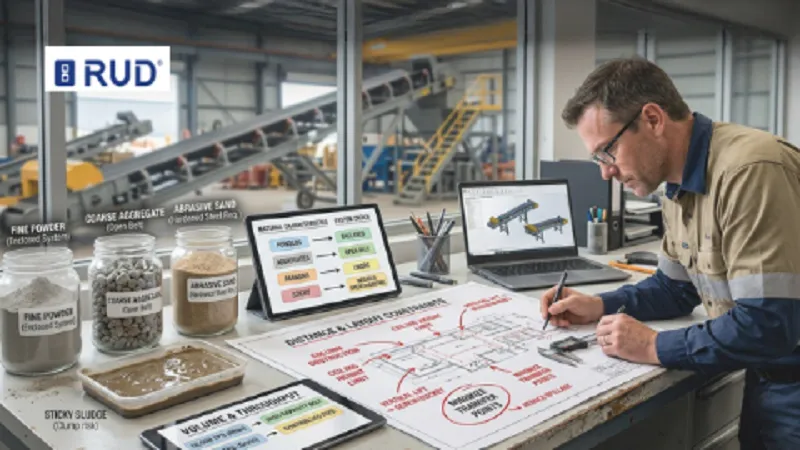
Fine powders need enclosed conveyors to prevent dust escape, while coarse aggregates can use open belt systems without spillage concerns. Plus, abrasive materials like sand or crushed rock wear components faster, so you’ll need hardened steel or replaceable liners in high-contact areas.
On the other hand, sticky or moisture-laden materials bridge inside hoppers and conveyors. When materials clump together like this, you need vibrating feeders or variable speed drives to maintain a consistent flow without manual intervention.
Volume and Throughput Demands
A grain facility moving 200 tonnes per day needs a different capacity than a mine shifting 10,000 tonnes across the same timeframe. In short, your daily tonnage determines whether you need high-capacity belt systems or controlled-feed designs.
Beyond these averages, peak harvest periods or production rushes require surge capacity built into the system. Batch operations can use smaller conveyors with precise dosing. Meanwhile, continuous processes need higher capacity systems running 24/7 without interruption.
Distance and Layout Constraints
Horizontal runs over 100 metres suit belt conveyors, while vertical lifts or tight corners work better with screw or bucket elevator systems. However, ceiling heights, structural columns, and existing equipment limit where you can route conveyors through your site without expensive building modifications.
Plus, every transfer point between conveyor sections adds cost and potential spillage. That’s why minimising transfers improves efficiency and reduces maintenance headaches down the track.
Conveyor System Types: Which One Fits Your Needs?
Different conveyor types handle different jobs, so once you know what each system does best, you can narrow down options without guessing. Australian bulk materials handling operations typically use four main conveyor types, each suited to different materials and site conditions.
| Conveyor Type | Best For | Typical Application |
| Screw Conveyors | Fine powders, enclosed handling | Food processing, cement dosing |
| Belt Systems | High volumes, long distances | Mining, quarrying, ports |
| Bucket Elevators | Vertical lifts, free-flowing materials | Grain handling, aggregate plants |
| Chain Conveyors | Heavy products, high temperatures | Automotive assembly, foundries |
Screw conveyors handle fine powders in enclosed spaces, which prevents dust escape and contamination in the food and beverage industries. Belt systems work differently. They move high volumes over distance with minimal power consumption, making them ideal for mining and manufacturing operations.
For vertical transport, bucket elevators lift materials without taking up floor space. Meanwhile, chain conveyors manage heavy or hot products that would damage rubber belts.
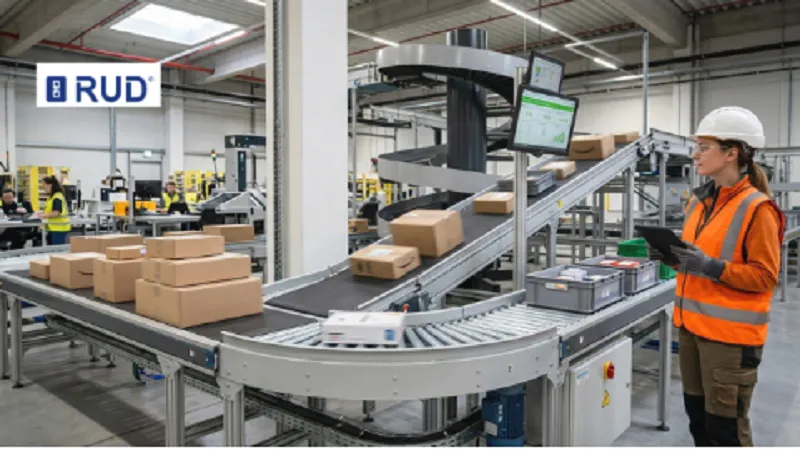
Spiral conveyors take vertical transport further by lifting materials in a compact footprint, which suits facilities where floor space costs more than the equipment itself.
Key Factors in Industrial Conveyor Design
Does your conveyor system need to run 24/7 in dusty conditions, or handle abrasive materials without wearing out in six months? If your answer is yes, you’ll need to prioritise durability, sealing, and wear-resistant components. These design choices determine whether your equipment runs reliably or causes constant production stoppages.
- Durability under load: Heavy-duty steel frames and sealed bearings last longer under abrasive rock, sand, or ore. On the other hand, lightweight frames crack within months when moving bulk materials continuously. In short, your components need to handle actual tonnage plus occasional overloads without premature failure or component replacement.
- Power efficiency: A 15kW motor running unnecessarily costs thousands in wasted electricity per year. Instead, proper motor selection based on material weight and speed cuts operating costs by 20-30% over the equipment’s working life. Efficient systems use less power while maintaining the same throughput.
- Safety compliance: Australian workplace safety standards require proper guarding on moving parts, emergency stop buttons within arm’s reach, and lockout points at motor isolators. Besides these requirements, exposed belt pulleys and unguarded chain drives create injury risks during operations.
- Maintenance access: Engineered conveyor design needs clearance for technicians to swap worn bearings and replace damaged belts without removing structural supports. Frankly, poor access turns a two-hour repair into a full-day shutdown that stops production completely.
These design factors work together to create a robust system. But even the best-designed conveyor fails if it’s not built for Australian operating conditions.
Matching Conveyor Systems to Australian Operating Conditions
Australian heat, dust, and wet season conditions push conveyor systems harder than standard equipment can handle.
Take Queensland mining operations as an example. They run through 40-degree heat and dust storms year-round. In contrast, coastal manufacturing facilities battle salt air corrosion without shutdown periods.
Through our practical experience across these sites, we’ve seen which materials handling systems hold up and which ones fail within months. Inland grain storage operations face temperature swings from freezing mornings to scorching afternoons.
As a result, these extremes expand and contract metal components, which creates stress on conveyor frames and bearing assemblies.
Meanwhile, wet-season downpours flood outdoor systems in North Queensland. That’s why proper drainage design and weatherproofing prevent motor failures during storms.
Bottom Line: Industries from automotive to food processing across Australian facilities need conveyor solutions engineered for local site conditions, instead of generic specifications.
Common Mistakes When Selecting Bulk Material Handling Equipment
Most conveyor failures start with selection mistakes made months before the equipment ever gets installed on site. These conveying problems trace back to decisions that looked like cost savings upfront but created expensive headaches later.
If you get the selection wrong, you’ll face constant downtime, excessive part replacement, and materials handling issues that compound over time.
The most common mistakes we see:
- Undersizing capacity to save upfront costs
- Ignoring material abrasiveness when choosing components
- Picking the cheapest quote without checking the application fit
- Skipping maintenance planning until problems emerge
Verdict: the capabilities you need must match your actual requirements, not just your initial budget.
Finding a System That Works for Your Site
Choosing the right conveyor system doesn’t have to feel overwhelming. If you match your equipment capabilities to what you’re actually moving, your daily volumes, and your site conditions, you’ll avoid years of breakdowns down the track.
Get this right upfront, and production losses, repair costs, and constant downtime won’t be problems you’ll need to deal with.
RUD Australia has expertise in helping businesses across Queensland find conveyor systems that actually work for Australian conditions. Our team understands the challenges you face in mining, manufacturing, and bulk materials handling operations.
Talk to us about your requirements, and we’ll help you find equipment you can rely on for the long haul. See More.